Terpenes vs Live Resin: Understanding the Monoterpene Content
The chemical contest between standard cured terpenes and live resin centres on how much monoterpene remains. Monoterpenes are light, volatile molecules that give the plant its fresh, floral plus citrus top notes but they disappear quickly at room temperature. During drying and curing, most monoterpenes escape - the final oil contains mainly sesquiterpenes - heavier molecules like caryophyllene that endure the process - but also the resulting flavour is spicy, musky but also dense. Live resin, flash frozen at harvest, keeps the monoterpene load that was there the instant the plant was cut - this delivers an aroma that is bright, sharp and immediately pungent, supplying a "freshness" that cured profiles do not provide.
Cured Resin vs Live Resin Terpenes: The Impact of Drying on Flavor
The main difference is that volatile monoterpenes stay present instead of breaking down through oxidation while the plant dries. Standard curing spreads drying across days or weeks - light aromatic molecules like myrcene, pinene and limonene escape with the water vapor. Once the monoterpenes leave, the remaining chemistry tilts toward heavier, less volatile sesquiterpenes like caryophyllene and this shift changes both the flow behavior plus the taste smell character of the extract obtained later. Live resin skips the curing step - oxygen never gets the chance to erode the trichome heads. The plant's original balance of monoterpenes to sesquiterpenes is locked in, matching the living crop at the exact hour it was cut.
What Are Live Resin Terpenes Advantages in Vape Cartridges?
Live resin terpenes offer a more pharmacologically complete profile that theoretically enhances the entourage effect through broader receptor modulation. Unlike distillate-based formulations that reintroduce botanical terpenes, live resin contains the full spectrum of non-plant-derived compound bioactive compounds, including flavonoids and thiols, which contribute to the holistic interaction with the System (ECS). Scientifically, the presence of these native compounds may alter the binding affinity of plant-derived compound like THC to CB1 receptors. Furthermore, the natural viscosity of live resin terpenes often negates the need for cutting agents or thickeners, providing a cleaner formulation that prioritizes lipid safety and respiratory health. NCBI/NIH research supports the significance of terpene diversity in plant material pharmacology.
The Extraction Process: What Is Live Resin Terpenes Production?
Live resin production follows a low temperature extraction method that dissolves active compounds while keeping heat to a minimum. The main goal is to collect the resin stored in glandular trichomes without also pulling out unwanted water soluble substances like chlorophyll or lipids. The procedure depends on thermodynamic principles - the entire sequence stays below freezing - the solvent targets chiefly non polar molecules like plant-derived compoundand terpenes. Because evaporation and heat damage are almost eliminated, the fragrant, volatile portion stays intact plus the final concentrate matches the chemical profile of the original plant material.
Harvesting and Freezing: The First Step in Live Resin Terpenes
The plant material must be frozen within minutes of harvest so that metabolism and enzyme activity halt. Workers place the biomass in a chamber cooled to between -20 °F and -80 °F (-29 °C to -62 °C), typically with liquid nitrogen or dry ice. The sudden cold turns the water inside the tissue into ice and the trichomes become locked in place. Because the temperature is so low, terpenes no longer evaporate plus enzymes no longer shift plant-derived compound like CBGa into other forms or degrade fragile terpene molecules. The "snapshot" chemical profile of the plant therefore remains unchanged until extraction begins.
Sub-Critical Extraction Methods for Live Resin Terpenes
The process uses light hydrocarbon solvents, usually a mix of n-butane and propane, cooled to cryogenic levels so the solvents dissolve only the wanted compounds. Supercritical CO₂ demands high pressure but this sub critical hydrocarbon method works under modest pressure plus very low heat. Because the solvents lack polarity, they dissolve the water fearing plant-derived compound and terpenes that sit inside the trichome cuticle. Propane is added so the lighter, easily lost terpenes are also pulled out. The cold keeps the frozen water in the plant solid - water but also water loving impurities stay behind.
Ensuring Solvent Removal in Live Resin Terpenes Processing
Solvent purging uses vacuum ovens to drop the boiling point of leftover hydrocarbons - they evaporate without harming the terpenes. Live resin is valued for its volatile compounds - high heat that removes butane or propane would ruin the product. Processors pull a strong vacuum, cutting the vapor pressure needed for the solvents to boil away. The leftover solvent turns to gas at temperatures below 100°F (37°C) and the extract reaches the required parts-per-million purity limit while keeping the fragile monoterpenes.
Formulating Premium Products with Live Resin Terpenes
Formulation demands an exact balance between flow behaviour and chemical stability so the liquid works with the hardware and each puff delivers the same dose. To build a vape product, producers mix High Terpene Full Spectrum Extract until it reaches a thickness that lets liquid climb through the ceramic core by capillary force but stays thick enough to avoid leaks. They usually reach this thickness - adding a very clean distillate to the HTFSE or - heating the crystal portion until the acids turn neutral, which stops solids from forming later inside the tank. The final mixture must be uniform - terpenes serve as natural solvents that keep the liquid mobile plus stop the plant-derived compound from separating from the fragrant compounds.
Mixing Guidelines for Live Resin Terpenes in Distillate
Start - blending live resin terpenes into raw distillate at 5 % to 8 % by weight. Live resin keeps most of its monoterpenes - those light molecules leave the oil faster than the heavy compounds found in cured resin. Store the mix away from open flame and intense heat. Heat the distillate alone until it flows, about 60°C (140°F) then allow it to cool slightly. Pour in the terpenes plus stir gently and evenly until the mixture looks the same throughout. Do not whip air into the oil because trapped oxygen triggers oxidation.
Viscosity and Flow Rate of Live Resin Terpenes Vapes
Choose a cartridge whose intake holes are 1.8 mm to 2.0 mm wide. That opening aligns with the flow rate of live resin formulas. The native terpenes in live resin lower the oil's viscosity but the final liquid remains more dense than botanical terpene mixes and less dense than straight distillate. If the oil is too thick the wick feeds it too slowly for repeated draws - if it is too thin it runs into the center tube and seeps out. Run a variable voltage battery at 2.0 V to 2.4 V so the delicate volatile molecules do not scorch.
What Are Live Resin Terpenes Best Used For? (Vapes, Dabs, Edibles)
Prioritize inhalation methods to fully experience the nuances of the fresh-frozen profile. Because live resin terpenes are defined by their capture of volatile aromatics, high-heat applications like baking can destroy the very qualities you are paying for.
- Vape Cartridges: The primary use case. They add the authentic "dank" or "gassy" flavor of flower to distillate or liquid diamond carts.
- Dabs and Infused Pre-rolls: Ideally used to re-introduce flavor to tasteless concentrates like THCa diamonds or to enhance the aroma of lower-grade flower.
- Edibles: Generally not recommended for baked goods due to heat degradation. However, they can be used in low-heat gummy formulations to provide a specific strain effect, though the "weedy" taste will be prominent.
Enhancing the Entourage Effect with Live Resin Terpenes
Choose live resin terpenes and full spectrum plant-derived compoundtogether instead of pure isolates. This choice supports the entourage effect, the idea that plant material elements cooperate plus give stronger results than any single element gives alone. Live resin terpenes keep more minor compounds - flavonoids, thiols and others - than cured terpenes keep. Once processors add those terpenes back to plant-derived compound , the full mixture adjusts the psychoactive response. The user then feels the exact profile - sedation, focus or creativity - linked to the original cultivar.
Storage Stability: How Long Do Live Resin Terpenes Last?
Keep live resin terpenes in a refrigerator that stays below 40 °F (4 °C). The liquid holds a large amount of monoterpenes that evaporate easily - it breaks down and turns rancid sooner than plant derived substitutes. If you seal it in glass that blocks UV light plus exclude air, the terpenes stay usable for six to twelve months. Let the closed bottle warm to room temperature before you open it - otherwise water from the air will settle on the inside surface and spoil the oil.




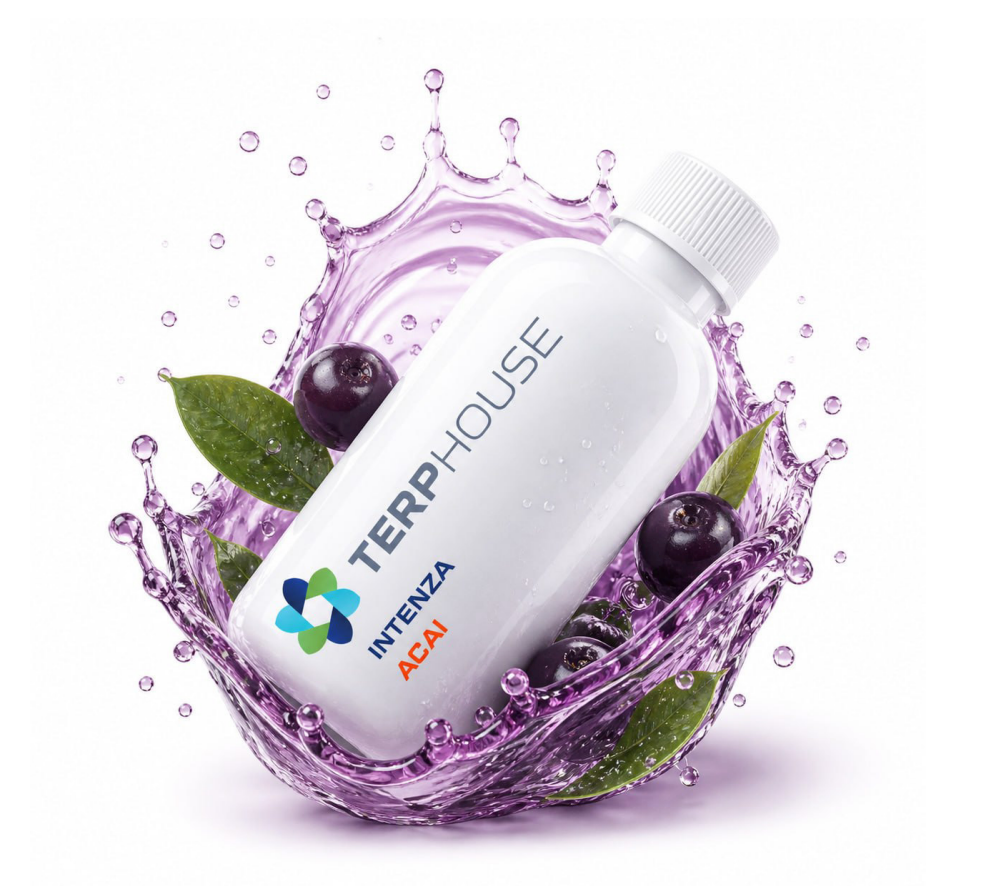

 Acai INTENZA
 Alien Dawg